
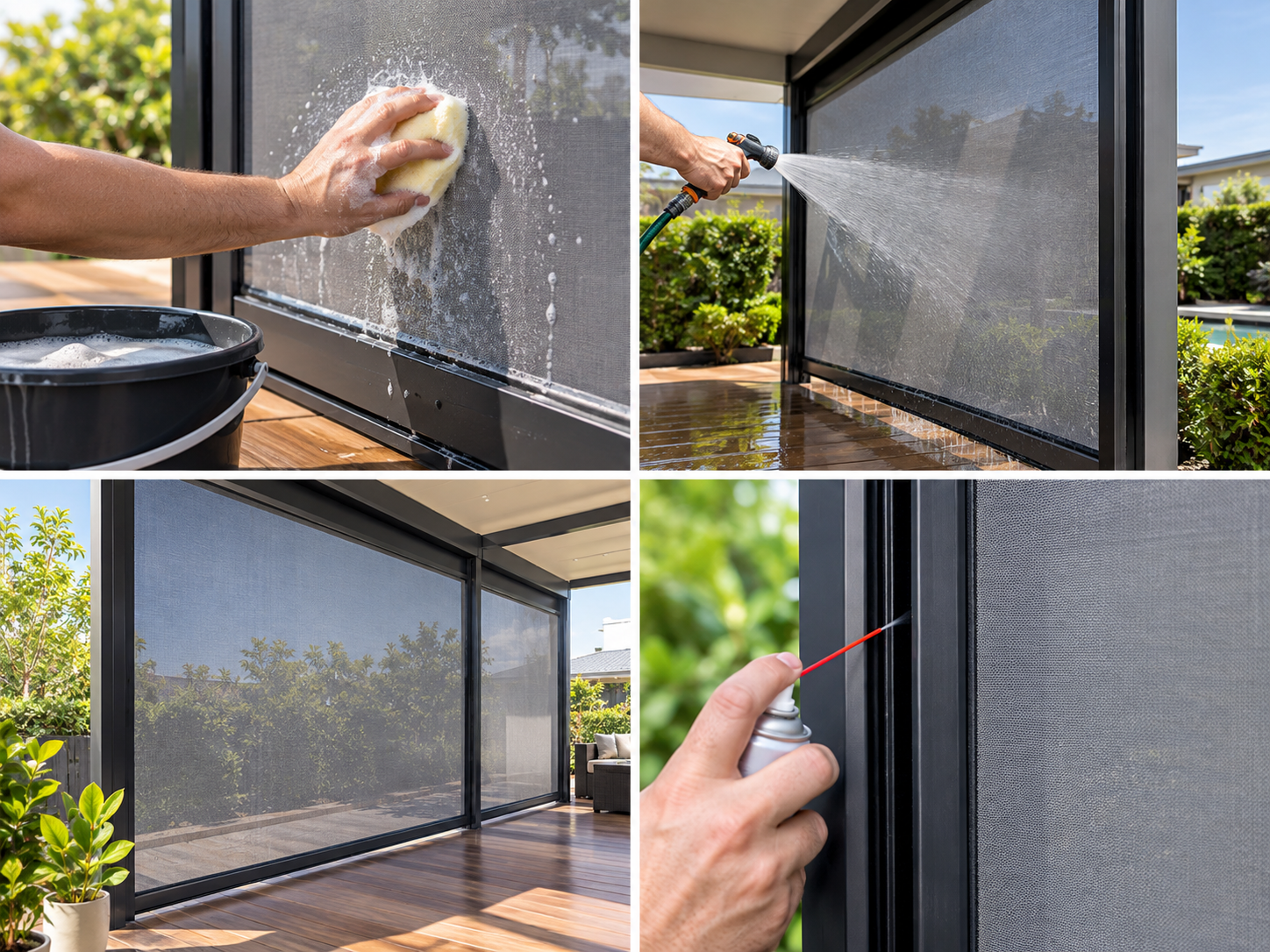
Zipscreen blinds are an excellent solution for creating comfortable, protected outdoor spaces. Whether installed on a balcony, terrace, patio, verandah or pergola, these innovative outdoor blinds help reduce exposure to sunlight, wind, dust and insects while maintaining a connection with the outdoors.
However, like any outdoor installation, Zipscreen blinds are regularly exposed to environmental conditions that can affect their appearance and performance. Dust, rainwater deposits, humidity, pollution and airborne debris can gradually accumulate on the fabric, aluminium components and side channels.
Regular cleaning and proper maintenance of Zipscreen blinds help preserve their appearance, support smooth operation and extend their useful life. A simple maintenance routine can also help prevent dirt buildup, staining and avoidable wear.
At LMT Automations, we believe that outdoor automation should combine convenience, functionality and lasting performance. Understanding how to clean and care for your Zipscreen blinds will help you enjoy a cleaner, more comfortable outdoor environment throughout the year.
1. How Often Should You Clean Your Zipscreen Blinds?
The ideal cleaning frequency depends on your location, the surrounding environment and how frequently you use your outdoor blinds.
Homes near the coast may experience salt deposits and higher humidity, while properties in urban areas can accumulate dust and pollution. Homes surrounded by trees may also need more frequent cleaning because of pollen, leaves and other organic debris.
As a general maintenance guideline, consider the following schedule:
| Location or environment | Suggested cleaning frequency |
|---|---|
| Coastal properties within approximately 5 km of the sea | Every 1–2 months |
| Other residential locations | Every 3–4 months |
| Dusty or high-pollution areas | More frequently, depending on buildup |
| Areas exposed to leaves, pollen or frequent rain splash | Inspect regularly and clean when needed |
These intervals are general recommendations. Follow the maintenance instructions supplied with your particular Zipscreen system, as fabric types, finishes and operating mechanisms may have different requirements.
In coastal locations, regular cleaning is especially important because accumulated salt and moisture can affect exposed surfaces and components. Removing these deposits promptly helps keep the blinds looking clean and supports the long-term care of the installation.
A quick visual inspection every few weeks can help you identify dirt, stains or debris before they become difficult to remove.
2. What Do You Need to Clean Zipscreen Blinds?
You do not need complicated equipment or strong cleaning products to maintain your Zipscreen blinds. In most cases, a few basic supplies are sufficient.
Before starting, prepare:
- A soft-bristle brush for removing loose dust and debris.
- A clean microfibre cloth or non-abrasive sponge.
- A bucket of clean, lukewarm water.
- A small amount of mild soap or a manufacturer-approved cleaning solution.
- A garden hose with a gentle spray setting, if rinsing is appropriate for your installation.
- A soft, clean cloth for removing excess water where necessary.
Avoid rough brushes, scouring pads, abrasive powders and harsh cleaning chemicals. These can scratch aluminium surfaces, damage protective finishes or affect the appearance of the blind fabric.
It is also important to check the manufacturer’s recommendations before applying any cleaning product to specialised fabrics, PVC screens or coated surfaces.
3. Step-by-Step Guide to Cleaning Zipscreen Blinds
Following a simple cleaning process helps remove dirt without placing unnecessary stress on the fabric or operating system.
Step 1: Lower the Blinds and Prepare the Area
Begin by lowering the Zipscreen blinds into their fully extended position, following the system’s operating instructions. Make sure the area is safe and accessible before starting.
If the blinds are motorised, operate them using the designated controls rather than pulling the fabric manually. Keep electrical controls, motors and connections protected from water.
Remove loose leaves, cobwebs and other debris from around the installation. Check the surrounding area for furniture or objects that could obstruct the cleaning process.
Step 2: Remove Loose Dust and Dirt
Use a soft-bristle brush or a suitable vacuum attachment to remove dust from the blind fabric. Work gently across the surface without pulling, stretching or pressing excessively against the screen.
Pay attention to the lower edges, side channels and accessible aluminium sections, where dust and debris can collect.
Removing loose particles before applying water is important because rubbing dirt into the fabric may cause unnecessary abrasion.
Step 3: Clean the Fabric and Aluminium Components
Mix a small quantity of mild soap with lukewarm water. Dip a soft sponge or microfibre cloth into the solution and gently clean the affected surfaces.
For visible marks, use light, controlled movements rather than aggressive scrubbing. Clean small sections at a time and pay attention to areas exposed to frequent handling, rain splash or dust.
If the system includes PVC fabric or another specialised screen material, use only products approved for that material. Test any permitted cleaning solution on a small, inconspicuous area first.
Never use solvents, abrasive cleaners, bleach or unapproved chemicals, as they may cause discolouration or damage to the fabric and surface finishes.
Step 4: Rinse Away Soap Residue
After cleaning, remove the soap residue using clean water. A garden hose with a gentle spray may be suitable when permitted by the product instructions.
Avoid high-pressure water jets, which can place excessive force on the fabric, seams, side channels and other components.
Make sure electrical equipment and motor housings are not exposed to water. If the manufacturer does not permit hose rinsing, follow its recommended alternative cleaning method.
Thorough rinsing is important because leftover soap can attract dirt and leave visible marks once the surface dries.
Step 5: Allow the Blinds to Dry Completely
Allow the blinds to air-dry in their extended position, provided weather conditions and the manufacturer’s instructions permit it.
Do not roll wet or damp fabric into the housing for prolonged storage. Trapped moisture may contribute to mould, mildew, unpleasant odours or material deterioration, depending on the fabric and environmental conditions.
Before retracting the blinds, check that the fabric is sufficiently dry and that no standing water or debris remains in accessible areas.
4. How to Maintain Zipscreen Side Channels and Zips
The side channels and zip-retention system play an important role in guiding and retaining the screen during operation. Dust, grit and other debris can accumulate in these areas and may interfere with smooth movement.
Inspect accessible side channels regularly and remove loose debris using a soft brush or another manufacturer-approved method.
If the system requires lubrication, use only a manufacturer-approved silicone spray lubricant suitable for the specific zip or guide mechanism. Apply it according to the product instructions and avoid spraying indiscriminately onto the screen fabric, electrical components or surrounding surfaces.
Do not use WD-40, CRC products or other oil-based lubricants unless the manufacturer specifically approves the particular formulation for that component. Such products may leave residues that attract dust or affect certain materials.
If you notice unusual friction, persistent noise, uneven movement or a zip that repeatedly comes out of alignment, avoid forcing the blind. Contact a qualified installer or service technician to inspect the mechanism.
5. Special Care for PVC Zipscreen Blinds
PVC Zipscreen products require additional attention because their behaviour can be affected by temperature, sunlight and moisture.
PVC materials may expand and contract as temperatures change. The extent of this movement depends on the product construction, material formulation and operating conditions. As a result, prolonged exposure to heat, unsuitable storage practices or improper operation may contribute to rippling, distortion or changes in appearance.
To help maintain PVC Zipscreen blinds:
- Avoid leaving them rolled up for extended periods in hot weather, particularly when the material is wet.
- Allow the screen to dry thoroughly before retracting it.
- Follow the manufacturer’s recommended operating position and storage instructions.
- Avoid folding, pressing or handling the material in ways that may create permanent creases.
- Use only cleaning and protective products specifically approved for the PVC screen.
Some manufacturers recommend dedicated PVC cleaners or protective treatments to help maintain the material’s appearance. If a product such as EasiClean or EasiGuard is recommended for your particular screen, follow the supplied instructions and compatibility guidance.
Do not assume that every PVC treatment is suitable for every screen fabric. Confirm compatibility with your installer or product manufacturer before applying any protective coating.
6. Common Zipscreen Cleaning Mistakes to Avoid
Even durable outdoor blinds can be damaged by unsuitable cleaning methods. Avoiding a few common mistakes can help preserve their finish and operation.
Using harsh chemicals: Strong solvents, bleach and abrasive cleaners may cause discolouration or damage to specialised screen materials.
Cleaning with excessive pressure: Aggressive scrubbing or high-pressure washing may stress the fabric, seams and retention system.
Rolling up wet blinds: Trapped moisture can encourage mould or mildew growth and affect the condition of certain materials.
Ignoring the side channels: Dirt and grit around the guides can interfere with movement and contribute to unnecessary wear.
Using unsuitable lubricants: Oil-based products can leave residues and attract dust, so lubrication should follow the system manufacturer’s guidance.
Forcing a jammed blind: If a motorised blind stops moving normally, repeated operation may worsen an existing problem. Stop and arrange an inspection if necessary.
Leaving dirt unattended: Salt deposits, bird droppings, tree sap and stubborn stains can become more difficult to remove over time. Clean affected areas promptly using an approved method.
A careful approach is more effective than relying on aggressive cleaning products or excessive force.
7. Seasonal Maintenance Tips for Indian Homes
India’s varied climate means outdoor blinds may experience intense summer heat, monsoon rain, humidity, coastal salt and airborne dust. Adjusting your maintenance routine to the season can help keep your Zipscreen installation in good condition.
Before Summer
Remove accumulated dust and inspect the fabric for marks or visible damage. Check that accessible side channels are free from debris and that the screen operates as expected.
During the Monsoon
Inspect the blinds after heavy rain and allow them to dry thoroughly whenever conditions permit. Avoid storing wet screens in the housing for prolonged periods. Follow the manufacturer’s guidance on operating the blinds during strong winds or severe weather.
After the Monsoon
Clean away accumulated dirt, water marks and other deposits. Inspect accessible components for signs of wear, unusual movement or damage that may need professional attention.
In Coastal Areas
Pay particular attention to salt deposits and airborne moisture. Clean exposed surfaces more frequently and follow the manufacturer’s recommendations for maintaining aluminium components and other exposed materials.
Regular inspections are especially valuable before periods of heavy use, helping you identify issues before they affect everyday operation.
8. When Should You Arrange Professional Maintenance?
Routine cleaning is suitable for ordinary dust and surface dirt, but some issues require professional attention.
Consider contacting your installer or a qualified technician if you notice:
- Uneven rolling or difficulty extending and retracting the blind.
- Unusual motor noise or repeated interruptions during operation.
- Damaged fabric, loose seams or visible zip misalignment.
- Persistent rippling or distortion of PVC material.
- Loose fittings, damaged brackets or other signs of mechanical wear.
- Water entering areas where electrical components are installed.
Do not dismantle the motor, alter the tensioning system or attempt complex repairs without appropriate training. Professional inspection can help identify the cause of a problem and determine the correct repair procedure.
The recommended servicing frequency will depend on the system, exposure conditions and manufacturer’s guidance.
9. Enjoy Long-Lasting Outdoor Comfort with LMT Automations
Zipscreen blinds can transform terraces, balconies, patios and pergola areas into more comfortable outdoor spaces. By helping manage sunlight, wind and exposure to the elements, they allow homeowners to make better use of areas that might otherwise remain underutilised.
However, maintaining their appearance and performance requires more than occasional cleaning. Gentle washing, appropriate drying, regular inspection and correct lubrication—where specified—are essential parts of a responsible maintenance routine.
At LMT Automations, outdoor automation solutions are designed to support more functional and comfortable living spaces. Whether you are planning a new outdoor shading installation or looking after an existing system, choosing the right products and following suitable maintenance practices can make a meaningful difference to your experience.
Looking to upgrade your outdoor space with Zipscreen blinds? Contact LMT Automations to explore outdoor shading solutions suited to your property, design preferences and requirements. Get in touch with leading entrance automation company to discuss Zipscreen blinds and create a more comfortable, versatile outdoor living space.
Frequently Asked Questions About Zipscreen Blind Cleaning and Maintenance
1. How often should Zipscreen blinds be cleaned?
As a general guideline, clean Zipscreen blinds every three to four months in typical environments. Properties within approximately 5 km of the coast may require cleaning every one to two months. Dusty locations may need more frequent care.
2. What is the safest way to clean Zipscreen blinds?
Remove loose dust with a soft brush, gently wipe the fabric with mild soapy water and a soft sponge, and rinse using an approved low-pressure method. Allow the screen to dry thoroughly before retracting it.
3. Can I use a pressure washer on Zipscreen blinds?
Avoid pressure washers and high-pressure water jets. Excessive water pressure may damage the fabric, seams or other components. Use a gentle cleaning method recommended by the manufacturer.
4. Can I use regular household cleaning products on Zipscreen blinds?
Use only mild soap or cleaning products approved for your specific screen material. Avoid bleach, solvents, abrasive products and unapproved chemicals that could damage the fabric or finish.
5. How do I clean the side channels of Zipscreen blinds?
Remove loose dust and debris from accessible areas using a soft brush. Keep the channels free from accumulated grit and follow the manufacturer’s guidance for any additional cleaning or lubrication.
6. Can Zipscreen blinds be rolled up when wet?
Avoid rolling up wet or damp blinds for prolonged periods. Allow them to dry thoroughly to help reduce the risk of mould, mildew and moisture-related deterioration.
7. How do I maintain the zip mechanism on Zipscreen blinds?
Keep the accessible zip and guide areas clean. If lubrication is required, use only a manufacturer-approved silicone lubricant suitable for the system. Do not apply oil-based products unless specifically approved.
8. Why are my PVC Zipscreen blinds developing ripples?
Rippling can have several causes, including temperature changes, material expansion and contraction, prolonged heat exposure, moisture or improper handling. Consult your installer if the distortion persists.
9. Do Zipscreen blinds need professional servicing?
Professional servicing may be necessary if the blind operates unevenly, the motor makes unusual noises, the zip becomes misaligned or the fabric shows signs of damage. Follow the maintenance schedule recommended for your particular system.
10. Can regular maintenance extend the life of Zipscreen blinds?
Regular cleaning, correct drying, suitable lubrication where required and timely repairs can help preserve appearance and support reliable operation. Actual service life depends on product quality, installation, environmental exposure and maintenance practices.
Leave a Reply
You must be logged in to post a comment.